
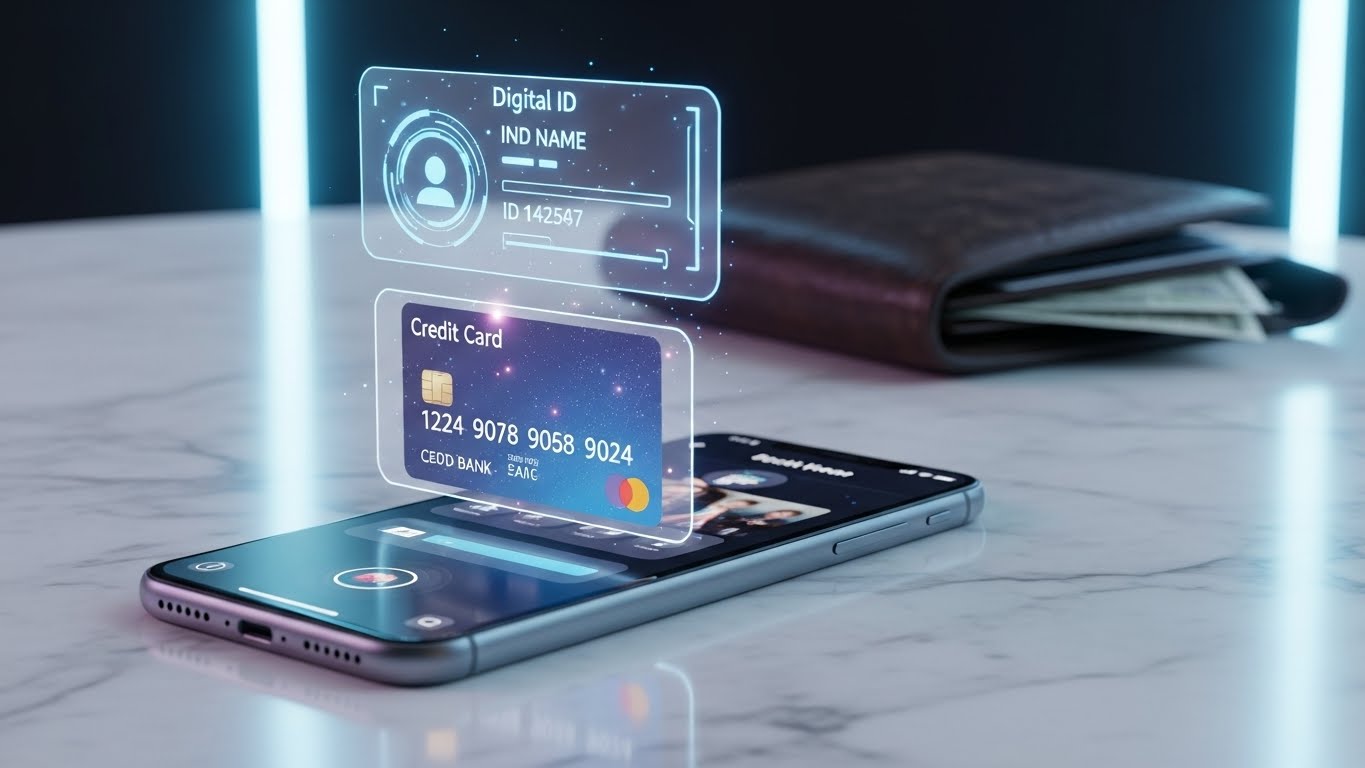
For decades, the standard “keys, phone, and wallet” check was a daily ritual. But in 2026, the physical wallet is becoming optional for millions.
As digital ID standards and mobile encryption evolve, your smartphone is transitioning from a simple card holder into your legal identity. At FixMyCard.com, we explore how this shift to a cardless world impacts your daily payments and what you need to know to stay secure.
Common reasons for the shift to Digital IDs
The move toward digital-only wallets isn’t just about convenience; it is driven by a global push for higher security and faster verification.
- The Rise of mDLs: In 2026, many more regions have adopted the Mobile Driver’s License (mDL). These aren’t just photos of your ID; they are encrypted files that can be scanned via NFC (near-field communication) just like a payment.
- Streamlined Verification: Banks are increasingly allowing users to open accounts or verify large transactions using the “Identity Wallet” on their phone, eliminating the need to carry a physical ID to a branch.
- Unified Security: By keeping your ID and your cards in one secure, biometric-locked vault (like Apple Wallet or Google Wallet), you reduce the risk of losing physical items that a thief could use instantly.
Technical causes: Why digital is replacing plastic
The “death” of the plastic card is being accelerated by several 2026 technological standards:
- ISO 18013-5 Compliance: This is the international standard that allows your phone to “talk” to an ID reader securely. It ensures that only the necessary information (like “Is this person over 21?”) is shared, rather than your full address and birthdate.
- Enhanced Tokenization: Just as with credit cards, digital IDs use tokenization. Every time your ID is scanned, a unique, one-time code is generated, making it impossible for someone to “clone” your digital identity.
- The “Zero-Knowledge Proof” System: This new tech allows you to prove who you are without actually showing your card. For example, a digital wallet can prove you have enough credit for a purchase without ever revealing your actual card number to the merchant.
What users can check themselves
If you’re ready to transition away from physical plastic, here is what you should verify:
- Check Your State/Country Support: Not all regions support digital IDs yet. Check your local government’s official app to see if an “mDL” option is available.
- Biometric Health: Ensure your phone’s FaceID or Fingerprint sensor is working perfectly. In a cardless world, these are your “keys” to your money and identity.
- Battery Management: The biggest risk of a digital-only lifestyle is a dead battery. Many 2026 smartphones have a “Power Reserve” mode that allows digital IDs and transit cards to work even if the phone is otherwise off.
- Keep a “Backup” Card: While we are close to a cardless world, it is still helpful to keep one physical “emergency” card in a safe place for merchants whose systems might be down.
Frequently Asked Questions
Is a digital ID as legal as a physical one? In many jurisdictions in 2026, yes. However, some places (like certain airports or international borders) still require the physical document. Always check the “Accepted Here” list in your wallet app.
What happens if I lose my phone? Unlike a lost physical wallet, a lost phone can be remotely locked and wiped. Your digital cards and ID are protected by your biometrics and cannot be easily accessed by a stranger.
Can I use a digital ID to open a new bank account? Many modern banks now support “Instant KYC” (Know Your Customer), where you can share your digital ID via your phone to verify your identity in seconds without paperwork.
Do digital wallets work without the internet? Yes. Most digital IDs and payment cards use NFC technology, which does not require a cellular or Wi-Fi connection to perform a local scan.
Will physical cards disappear entirely? While they won’t disappear overnight, many experts predict that by the end of the decade, physical cards will be “opt-in” only, with digital being the default for most banks.
When to contact the bank
You should reach out to your card issuer or ID authority if:
- Your digital wallet refuses to authorize a valid ID file.
- You see a “Credential Expired” message on a digital card that should be active.
- You suspect someone has gained unauthorized access to your cloud-based identity account.
Recommended Reading
- Stop Swiping! Why You Should Use Chip or Tap Only in 2026
Understand why the physical “magnetic stripe” is being removed from cards as we move toward digital-only systems. - AI Fraud Defense: How to Secure Your Cards Against “Agentic” Scams
As wallets go digital, so do the scams. Learn how to protect your “Identity Wallet” from automated AI threats. - New 2026 Biometric Rules: Why Your Card Might Need a “Face-to-Face” Check
Learn how digital verification is becoming the new standard for banking security in Southeast Asia.
Mandatory Disclaimer This article is for informational purposes only. FixMyCard.com is not a bank or financial institution. For account-specific issues, please contact your bank or card issuer directly.
Sources: