
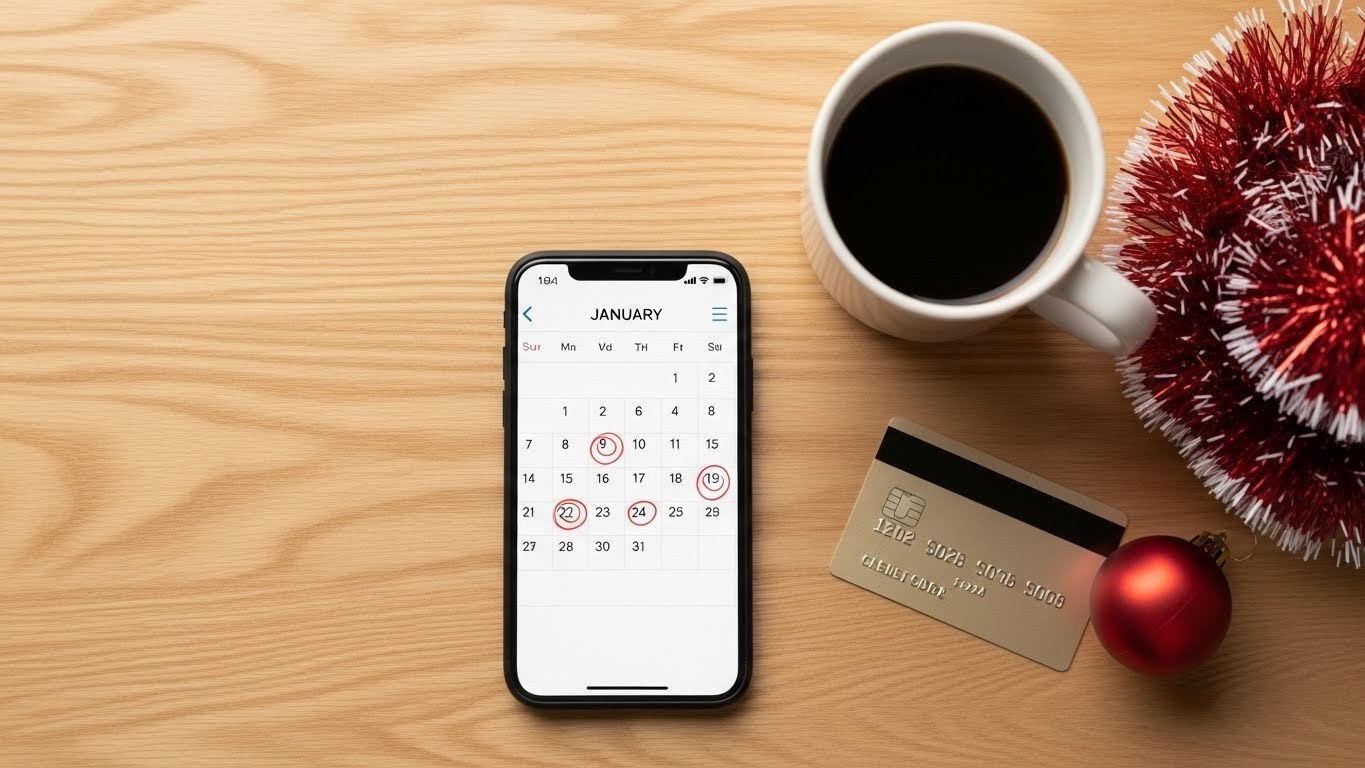
The decorations are packed away, but for millions of people, the “ghost of Christmas past” is just arriving in the form of a credit card statement. Global credit card debt hit record highs in late 2025, and as of today, January 6, 2026, the grace period for those holiday purchases is rapidly closing.
At FixMyCard.com, we call this the “January Debt Hangover.” If you don’t act this week, you could face interest rates as high as 29%, effectively erasing any “deals” you found during Black Friday. Here is your global guide to clearing that balance before the interest bites.
Common reasons holiday debt lingers
It’s rarely one big purchase that causes the hangover; it’s usually the “invisible” costs that accumulate:
- The BNPL “Stack”: Many users used “Buy Now, Pay Later” (BNPL) for multiple small gifts. By January, those “four easy payments” have stacked up into one giant monthly bill that exceeds your income.
- Deferred Interest Traps: Many store cards offered “0% interest for 6 months.” If you don’t pay the entire balance by the deadline, the bank will retroactively charge you interest from the original purchase date.
- The “Minimum Payment” Illusion: Paying only the minimum on a $3,000 holiday balance could take you over 8 years to pay off and cost you nearly $3,000 extra in interest.
Technical causes: Why 2026 interest is higher
In 2026, banking algorithms have become more aggressive. Here is what is happening behind the scenes:
- Variable APR Hikes: Most credit cards have variable rates tied to the central bank’s “Prime Rate.” Even if you haven’t changed your spending habits, your interest rate is likely 2-3% higher than it was two years ago.
- Daily Compounding: Most modern cards calculate interest daily. This means every day you wait to make a payment, the “cost” of your debt increases.
- Credit Score Dampening: High “Credit Utilization” (using more than 30% of your limit) during the holidays can temporarily lower your credit score, making it harder to qualify for low-interest consolidation loans in January.
What users can check themselves
You can “defuse” your debt bomb by performing these three checks today:
- Find the “Interest-Free” Expiry: Look at your statement for a section called “Promotional Balances.” Mark the exact date the 0% period ends on your calendar.
- The “Statement Closing Date” vs. “Due Date”: To improve your credit score quickly, pay your balance before the Closing Date, not just before the Due Date. This ensures a lower balance is reported to credit bureaus.
- Identify “Zombie” Subscriptions: Holiday trials for streaming services or shipping memberships (like Amazon Prime or local equivalents) often renew in January. Cancel them now to free up cash for your debt.
Strategies for a Global Audience
1. The 0% Balance Transfer (Best for High Credit)
If you have a credit score above 670, look for 2026’s top balance transfer cards (like the Wells Fargo Reflect® or Citi Simplicity®), which currently offer up to 21 months of 0% APR.
- Note: Expect a 3% to 5% transfer fee, but this is much cheaper than paying 25% interest for a year.
2. The “Debt Avalanche” (The Logical Choice)
List your cards by interest rate. Pay the absolute minimum on all of them, and throw every extra dollar at the card with the highest APR first. This mathematically saves you the most money.
3. The “Debt Snowball” (The Psychological Choice)
If you feel overwhelmed, pay off the smallest balance first. The psychological “win” of closing an account gives you the momentum to tackle the bigger ones.
Frequently Asked Questions
Is it worth taking a personal loan to pay off credit cards? In 2026, if your credit card APR is 24% and you can get a personal loan at 12%, yes. It simplifies your life into one monthly payment and cuts your interest in half.
Can I negotiate my interest rate? Surprisingly, yes. Call your card issuer and say: “I’ve been a loyal customer, but my current APR is too high. Is there a promotional rate or a hardship plan available to help me clear this balance?”
Does a balance transfer hurt my credit score? Opening a new card causes a small, temporary dip (hard inquiry), but your score will likely go up in the long run as your “Credit Utilization” drops.
When to contact the bank
Contact your bank immediately if:
- You know you cannot even make the minimum payment this month.
- Your interest rate was raised without the required 45-day notice (in many regions).
- You see “Late Fees” on a payment you made on time.
Recommended Reading
- [Debit Card Declined but I Have Money? 7 Quick Fixes] If you’re switching to debit to control spending, make sure you know how to keep it working.
- [Why Did My Credit Score Drop After I Paid Off My Balance?] Debt payoff can sometimes cause weird score fluctuations. Learn why.
- [New 2026 Biometric Rules: Why Your Card Might Need a “Face-to-Face” Check] Security updates are hitting this month. Ensure your “payoff” payments aren’t blocked by new verification rules.
Mandatory Disclaimer This article is for informational purposes only. FixMyCard.com is not a financial advisor. For personalized debt advice, please consult a certified credit counselor or financial planner.