
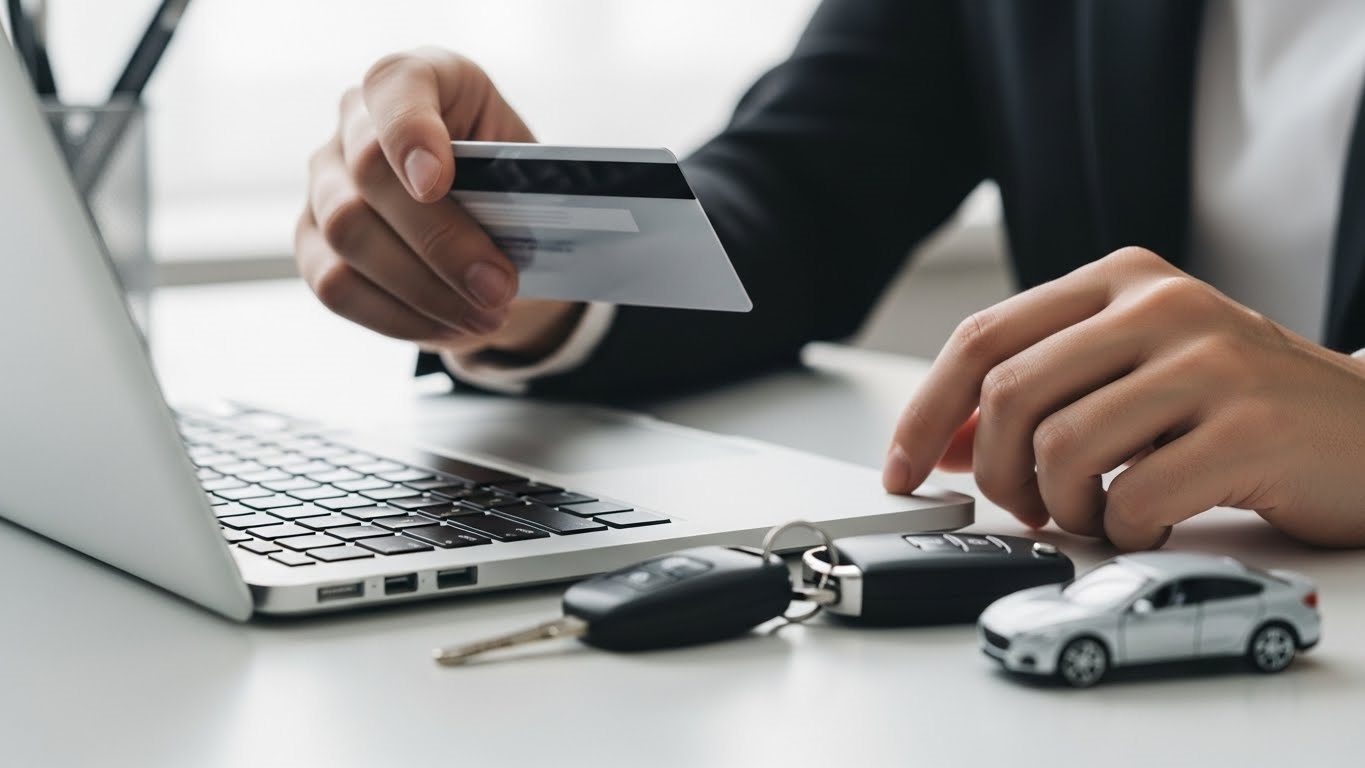
Finding out that you cannot simply “swipe” to pay for your vehicle can be a frustrating surprise. If you are looking to use a credit card for your monthly auto loan, you aren’t alone. Many drivers consider this option to help manage monthly cash flow or to earn card-related rewards and points.
While using a credit card for these transactions is often possible, the process rarely works like a standard retail purchase. This guide explains why lenders have specific rules for credit card payments and how you can navigate your account options.
Why Lenders Limit Credit Card Payments
In many cases, your ability to use a credit card depends on your auto lender’s internal policies. Most lenders prefer direct bank transfers (ACH) for several key reasons:
1. Merchant Processing Fees
Every time you use a credit card, the merchant—in this case, your car lender—must pay a processing fee to the card network. Because car payments are usually large, these fees can cost the lender hundreds of dollars over time. To avoid these costs, many institutions restrict payments to bank accounts only.
2. Loan Agreement Restrictions
Most auto loans are “secured debt,” meaning the car is collateral. Paying a loan with a credit card is essentially using “unsecured debt” to pay off “secured debt.” Some financial institutions have policies against this because it changes the borrower’s risk profile.
Technical and Security Factors to Consider
Even if a lender allows credit card payments, they often use specific systems to handle the transaction securely.
- Third-Party Processors: Many lenders do not accept credit cards directly. Instead, they use external services. These services usually charge a “convenience fee” to cover the processing costs.
- Cash Advance Risks: Some credit card issuers categorize a loan payment as a “cash-like transaction.” If this happens, your card provider may process it as a cash advance, which often triggers higher interest rates and lacks a grace period.
What to Check Before You Pay
Before attempting a payment, check these four areas to ensure the transaction goes smoothly:
- The Payment Portal: Log in to your lender’s website and check the “Payment Method” section. See if “Credit Card” is a selectable option alongside “Checking/Savings.”
- Hidden Fees: Look for disclosures regarding “convenience” or “service” fees. These are often flat rates or a percentage of your total payment.
- Available Credit: Ensure your card has enough room to cover both the car payment and any extra fees.
- Card Issuer Terms: Review your card agreement to see how they handle “financial service” payments to avoid unexpected fees.
Comparing Car Payment Methods
The table below breaks down the common differences between payment types. Keep in mind that specific terms depend on your auto lender’s policies.
| Payment Method | Typical Fees | Processing Speed | Best For… |
| Bank Transfer (ACH) | Usually $0 | 1–3 Business Days | Avoiding extra costs and setting up autopay. |
| Debit Card | Low or No Fee | Instant Authorization | Last-minute payments without high credit fees. |
| Credit Card | 2% – 4% Service Fee | Instant Authorization | Earning rewards (if the fee is lower than the reward). |
| Third-Party App | High Flat Fees | 2–5 Business Days | When a lender refuses credit cards directly. |
Quick Tips for Your Readers
- The “Fee Factor”: If your car payment is $500 and the lender charges a 3% fee, you will pay an extra $15 every month. Over a 60-month loan, that adds up to $900 in fees alone.
- Rewards Math: Most credit cards offer 1% to 2% cash back. If the lender’s convenience fee is higher than your card’s reward rate, you may end up spending more than you earn.
- Avoid “Cash Advances”: Always confirm with your credit card issuer that they treat bill payments as a purchase, not a cash advance. Cash advances often have no grace period and start accruing interest immediately.
Frequently Asked Questions
Why does my lender accept debit cards but not credit cards?
Debit card processing fees are significantly lower than credit card fees. This allows lenders to offer the convenience of instant payment without the high costs associated with credit networks.
Can a bank block a car payment made via credit card?
Yes. A card issuer may flag a large payment to a financial institution as a security risk or a violation of their terms regarding debt-to-debt payments.
Is it safe to use a third-party app to pay my loan?
While legitimate services exist to facilitate bill payments via credit card, they always charge a fee. Always verify the service’s reputation before sharing your account details.
Will my car payment be processed immediately?
Authorization usually happens instantly, but it typically takes 1–3 business days for the funds to move from your card issuer to the auto lender.
Does paying with a credit card stop late fees?
A payment is generally considered “received” once the lender accepts it. However, if the payment is later declined by your card issuer, the lender may still apply late fees to your account.
When to Contact Your Bank or Lender
Because every loan agreement is unique, the best way to get a definitive answer is to speak with your lender directly. You should reach out if:
- The online portal does not show a credit card option.
- You need to confirm the exact fee for using a card versus a bank transfer.
- Your payment was declined despite having a sufficient credit limit.
When you call, have your loan account number and credit card statement ready. This helps the representative identify how the transaction is being categorized.
Conclusion
Using a credit card for a car payment is a common goal, but success depends on your lender’s specific rules. Most issues are caused by system limitations or processing fees rather than your specific credit history. By checking your lender’s accepted methods and watching for convenience fees, you can manage your payments responsibly.
Mandatory Disclaimer
This article is for informational purposes only. FixMyCard.com is not a bank or financial institution. For account-specific issues, please contact your bank or card issuer directly.
Expert Sources & References
- Experian:Can You Make a Car Payment With a Credit Card?
- Key Insight: Confirms that while direct payments are rare, indirect methods (third-party processors) exist but often carry fees of ~2.9%.
- American Express:Can You Make a Car Payment with a Credit Card?
- Key Insight: Explains the difference between purchase transactions and “cash-like” transactions which can trigger high-interest cash advances.
- NerdWallet:Can I Pay Off a Car With a Credit Card?
- Key Insight: Discusses the “debt-for-debt” risk and explains why some major issuers (like Chase) may block these transfers.
- Ally Auto Help Center:Making a Payment FAQs
- Key Insight: A real-world example of a major lender’s policy, showing they accept debit cards via third parties (CheckFreePay) but typically require bank accounts for standard payments.
- Capital One:Paying a Car Loan with a Credit Card
- Key Insight: Details the “Math of Rewards” vs. “The Cost of Fees” to show why it isn’t always financially beneficial.